Saturday, 15 October 2011

FIJI ISLANDS OF SMILES


Fiji, some 500 islands in the South Pacific Ocean, is a true island paradise. There are two large islands Viti Levu and Vanua Levu. Both offer amazing scenery, warm crystal clear waters and sandy beaches fringed by romantic palms. Vanua Levu is the lesser-visited island, with its mountainous interior covered with rain-forest, it presents undistorted wilderness. Viti Levu has major airports in Suva and Nandi. Many islands, Mamanutha and Yasawa groups, connected by ferry services surround it.


Captain Cook met Fijian people in his explorations of the Pacific. At the time they were a nation of warriors and cannibals. Now Fijians are the kindest and friendliest nation very generous with their smiles. Fijians are famous for their hospitality and excellent humor, laughter is heard around villages, markets, and shops. The laughter is contagious and puts everyone around into a happy frame of mind.


Fiji has excellent cruising grounds. Short ferry trips take you to secluded islands, unspoiled beaches and coral reefs full of fish, rays, turtles where snorkeling is amazing. The waters are turquoise and warm. The underwater world is easy to explore and enjoy.  In fact, the coral reefs are one of the best in the Pacific. The marine life is abundant.


Fiji is an amazing and unforgettable experience. The beauty of the islands, scenery on land and under the water is astonishing. The warm and sunny climate is inviting. Always smiling and friendly people are helpful.The exotic fruits are bountiful.

A visit to Fiji and its memories will leave a permanent smile on your face.

Wednesday, 5 October 2011

FRENCH POLYNESIA - BORA BORA

BORA BORA
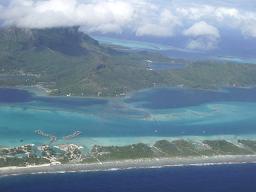
The flight on Air Tahiti is not only means of transport. It is a scenic flight offering some amazing aerial views of islands like Moorea, Raiatea, Tahaa, Huahine, Maupiti and Bora Bora. The colors of reefs, lagoons, ocean and mountainous islands are breathtaking.

 The arrival at Motu Mute - the airport of Bora Bora is not the end of the journey. There is a boat trip to Vaitape, the main town on the island, which becomes a part of spectacular sightseeing through the lagoon. 
Another centre is Matira  with a number of resorts and pensions and beautiful white sand beaches that are so rare in most of Polynesia. While the resorts offer car or scooter hire at an additional cost, the pensions have free bicycles. They are the same as the locals use, old fashioned, pedal back breaks but it is easy to get adjusted and enjoy a trip around the island on a bike stopping for a swim and enjoying the sights. Another way of circumnavigating the island is to do it by boat. The ever changing lagoon colors are incredible and the snorkel stops very enjoyable, although some a bit scary. Swimming with sharks has proven to be safe though, rays, turtles and colorful fish plentiful and the water warm and clear. 

FRENCH POLYNESIA

TAHITI

The first thing one will notice arriving in Tahiti is the overpowering smell of Tiare. There are many varieties of prettier flowers like hibiscus in all its colors of red and pink, shades of yellow to orange and white; graceful heliconias and bromeliads, Flamingo flowers and a colorful variety of orchids. They all are pleasing to the eye but it is Tiare and frangipani that are used for flower headdresses, necklaces  or a simple flower behind everybody’s ear.
Tahiti is really two connected islands looking a bit like a turtle on a map - Tahiti Nui being the body and Tahiti Iti the head of the turtle. Tahiti is much more then just Papeete. Tahiti Nui - the big island - has some historical sites that should not be missed. Some date back to the pre European time, some are the landmarks of first European arrivals followed by the missionaries. There is also a wild interior of waterfalls, volcano crater, lakes and rich vegetation. The road through the heart of Tahiti has to be explored in a 4x4 drive and it is the best to take a safari tour to see all the attractions.


Tahiti Iti - the small island - has only 15 kilometers of road on its East Side and 18 on its West Side so a round trip is possible only by boat. Tahiti Iti is a quiet location with magic scenery offering walks, hikes, surf beaches and very affordable pensions.
Both Tahiti Nui and Tahiti Iti offer relaxation and adventure, excellent hiking, swimming and surf. There are grottos, blow holes and waterfalls to explore. There is history and customs to learn about. But Tahiti is only a small part of French Polynesia. There are many islands to see and enjoy. Some are close like Moorea, some are distant and off the bitten tourist track. They all offer varied and unique landscapes, turquoise lagoons and friendly local people. Some archipelagos like Tuamotus, Marqueses, Australes or Gambier are far away and preserve their own languages and culture.

Sunday, 2 October 2011

XIN CHAO TU VIETNAM or GOOD MORNING VIETNAM


Vietnam is fast becoming a top tourist destination. There are many reasons why. Shopping is definitely a major reason for many. However, there is a growing number of visitors that appreciate the history, scenery, culture, cuisine and local people. A small effort to learn a few phrases in Vietnamese allows for making friends, brings smiles to their faces and sometimes laughter – it is a difficult, tonal language like Chinese. Xin chao could mean “hello” or “give me a bowl of soup”, so it is easy to have lots of fun practicing Vietnamese and it is amazing to observe happiness radiating from those one addresses.  


The climate is hot. Thus the locals start their day early and have a siesta during the hottest part of the day. The mornings start with walking to the nearest park or riverbank. Everybody seems to be walking and exercising at 5 am. Parks and riverfronts are full of people doing keep fit exercises, even the seniors do the slow motion Tai Chi. It is the only time of day cool enough to be energetic. A spectacular sunrise is an extra bonus. 
The history of Vietnam is reflected in the architecture dating from the 10th century on. Luckily those treasures have not been destroyed by war. The citadels, temples and pagodas scattered through the landscape are impressive and pleasing to the eyes. The history behind them shows constant foreign presence – Chinese, French, American although the last one caused only distraction. 
The scenery in Vietnam is varied and stunning. From vast waterways and vibrant life on the rivers of Mekong Delta, through scenic Hai Van Pass to Halong Bay in the North of the country, the landscapes are enchanting. The life in Mekong Delta is as busy as in any city. People live and shop on the river and the boat traffic matches car traffic anywhere in the world. Well, except Vietnam itself. The main road traffic here is still a scooter. Scooters are so plentiful that one needs assistance in crossing a road. Or if you brave the crossing by yourself here is a bit of a local advise: ”Never hesitate when crossing a road, just keep on going, the scooters will avoid you! If you turn back an accident is inevitable.”
Vietnam is a destination that can fascinate a variety of interest groups: social study, linguistic, photography, cuisine – most hotels have cooking classes, lovers of history and lovers. There are resorts made for honeymoon, like Pilgrimage Village in Hue or Victoria Hotel in Hoi An. A visit to Vietnam is a memorable experience. And a very important feature of a visit to Vietnam is excellent shopping. Value for money is the motto and superb shopping spots are Binh Tay Markets in Ho Chi Minh City, Hoi An Markets and the merchants’ homes of the old Town scattered among pagodas and temples, souvenir shops of the Old Quarter in Hanoi and its markets. Vietnam will not disappoint a visitor disregarding what is the reason for the visit. 


NIUE A Time Warp

Traveling in time usually brings to mind future. However, traveling to Niue is actually traveling into the past. Niue preserved the days gone by. Its scenery is unusual and dramatic; the caves, chasms and coral gardens are unique.

Niue is built of coral and has the most unusual coral forests covered by lush vegetation. The landscape on some parts of the island is almost moonlike. The climate is tropical so the rain forest has a selection of stunning plants and flowers. Quite a few of those are eatable. Luku is a tasty green veg and can be served like spinach, sauté with onion and garlic.

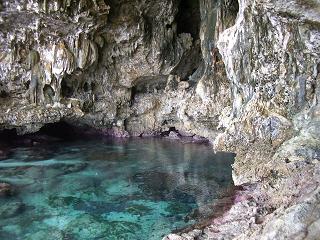
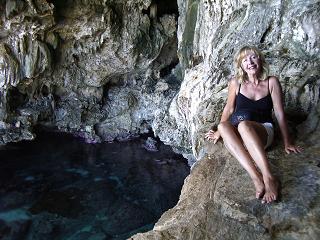
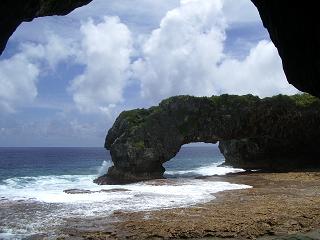
Forest walks are the obvious attraction especially when uga – the coconut crab can be spotted. There are additional surprises at the end of each walking track. It can be a sandy beach with palms – Togo Chasm, fresh water pool – Anapala Chasm, coral arches – Talava Arches or one of many caves. Most caves have pools of coral where snorkeling is spectacular. 
The population of Niue is 1200 and that includes the visitors. There is only one flight a week arriving on Niue. If there is a problem with a generator and power supply becomes limited one must wait for a flight to bring a spare part and most likely somebody that knows how to install it. We had a power cut from 6 am – 12 noon. That meant that there is no water as well since an electric pump does not work at that time. None of the visitors to the island did mind, they just started they day early. If the power cut was scheduled for an evening it just meant a romantic candle light dinner cooked with the help of a small, resort generator.  The visitors were from far away – Finland, Brazil and not so far away – New Zealand. They all had one thing in common – the unusual charm and beauty of Niue fascinated them. They did not mind small and unimportant inconveniences.
Niue is not for everybody. It is a destination that attracts only the adventurous type of traveler. And those come from far away. The accommodation does not offer every comfort. It is just pleasant and clean. The restaurant choice is limited. Jenny’s is opened only on Tuesdays – delicious seafood buffet. Washaway Café in Avatele serves delicious fish foccacia with salad only on Sundays. Matavai Resort prepares the evening menu at 5 pm to start ordering at 6 pm. If you are booked for the Discover Uga evening Tour that departs at 6 pm you missed out on dinning. None of that matters though. Niue’s special charm and amazing experiences of swimming with dolphins and whales, diving or snorkeling on coral and reef walking make one forget and forgive small imperfections that many tourists expect. Do not have any expectations. Just enjoy the beauty and unique charm of Niue. And remember you are traveling into the past. There is an Internet service available on the island, obviously only when the power is on. Even then it is so slow that it would be a shame to waste the valuable time of being in Niue in front of a computer. Travel light, bring your snorkel and leave the computer behind. Everything about Niue is special, different and unimaginable until you see it.  There are no sandy beaches, so do not be disappointed. But there are the most stunning swimming pools around the island.
Niue is a world apart from any destination. Its beauty can be explored for free. There are no entry fees to the stunning attractions the Island has to offer. Hiking, swimming and snorkeling are all free. There are guided bush walks were one can learn about the flora and fauna of Niue and site a rare uga, there are also diving trips but both are very reasonably priced.

The locals are friendly and it is fun to join them swimming at Matapa Chasm, at Matavi Resort to watch the sunset or at Washaway Café to keep a lookout for passing whales and dolphins. It is easy to develop friendships and get invited to local celebrations and become part of the island population. Most visitors pledge to return to the island and it is not surprising. There are very few places left in this world that offer unrestricted freedom of exploring the magnificent sites and allow for true one on one experience with nature.

Friday, 30 September 2011

AITUTAKI, COOK ISLANDS

AITUTAKI
ESCAPE TO PARADISE


Aitutaki is one of the 15 islands in the Cook Islands group. Well, it really is a shining pearl of Cook Islands. It is much more than just a tropical island with its fragrant and colorful flowers, sandy beaches, swaying palms and crystal clear and warm waters. Aitutaki, meaning ‘to keep the fire going’, gives her name to a lagoon of all shades of turquoise and azure waters and islets and reefs surrounding the lagoon. 

Aitutaki has a rich history starting with first Polynesian settlers arriving in canoes, then Captain Bligh sighting the atoll in 1789 on board of ‘Bounty’ to be followed in 1821 by the first missionaries bringing Christianity to the local population. Charles Darwin visited in 1835 on board of ‘Beagle’ and 1850s brought whaling ships. Aitutaki was first to receive an airstrip built by Americans in 1942. It was the longest runway in the Cook Islands till 1974 when the airport in Rarotonga was completed. 
TEAL - Tasman Empire Airways Limited – has used, picture pretty from the air Aitutaki, as a fueling stop on its ‘Coral Route’ for refueling their flying boats in the 1950s. Some passengers had to spend a night on Akaiami motu, where the flying boats landed, when the weather prevented the flying boats from further travel to Tahiti. The stranded passengers were well looked after. Canoes brought supplies so that the passengers could experience a culinary feast and entertainment from local dancers and musicians. The stranded passengers were delighted to have the unexpected extended stay in the most magical transit point on route. 
TEAL carried Queen Elizabeth in 1954, Graham Greene, Cary Grant, Gary Cooper, and John Wayne to name a few famous names. When a flying boat once had to return to Tahiti for engine repairs and left some 40 passengers for a number of days on Akaiami motu they simply did not want to carry on their journey when the flying boat returned with the engine fixed. Today, TEAL services have been replaced by regular flights on Air Rarotonga and Aitutaki is the next after Rarotonga, most visited island in the group. Air Rarotonga airfares from Rarotonga are not cheap but some special fares of $109.00 each way can be found in the off peak time. Outside of the off peak specials it is a double of that price each way. In spite of the expense a trip to Aitutaki is a rewarding experience.

It is possible to walk around the island and hike up to a 120 meters tall Maungapu for a 360 view. Maungapu, according to the legend, has been cut from the top of Raemaru Mountain on Rarotonga and brought to Aitutaki in canoes. It is the only hill here so it is effortless to bike around the island. A stop in Arutanga is a must; it is the town and harbour of Aitutaki. However, the lagoon boat tours depart from O’out Beach. And the lagoon and its motu are the main attraction of Aitutaki. 
A Lagoon tour is an absolute must. The color of the water changes with depth and sunlight angle from turquoise to deep blue and the underwater life is spectacular. There are reefs, colorful fish and giant clams. The underwater visibility is crystal clear. In fact, one of the diving sites of the outer reef is called ‘Paradise’. But it is not only marine environment that can be described as paradise. Aitutaki has the most relaxing atmosphere. A lagoon tour is about discovering the amazing beauty of nature spiced up by lunch of fish, salads and fruit and a tune of ukulele and guitars.
There is a great range of accommodation on Aitutaki. Nature disregards the expanse involved and gives the same amazing performance of heavenly beauty to those that pay $1000.00 per night or $100.00 per night. It is also possible to visit Aitutaki on a Day Tour including Air Rarotonga airfare, island sightseeing bus tour and a boat tour of the lagoon on board of the Polynesian Titi-ai-Tonga catamaran. Those that choose the day tour promise to return to paradise. Those that spend some time on Aitutaki whish they could stay longer. Aitutaki has been charming its visitors for centuries and has been described as ‘Paradise on Earth’ in its legends, in the reports of the greatest air journeys of ‘Coral Route’ and by contemporary visitors.

ANGKOR WAT A WONDER OF THE ANCIENT WORLD

“I need to pick you up at 5 am! It will be still dark,” said Billy, my tuk tuk driver. OK, so there is no sleeping in this holiday. I only just got back from the sunset at Phnom Bakheng. The trick is to get to Angkor Wat entrance by 4.30pm and queue up to get a day pass for the next day. That entitles you to sunset entry at no extra cost. Phnom Bakheng is a fair walk up the hill followed by a steep climb to the top of the well-preserved ruins. In fact, the steps are original 11th century, worn out and narrow. Only in some places the steps were replaced with much easier to climb a modern, wooden version.

Billy was right to his word. We were on the way to Angkor Wat at 5 am, still dark but the traffic building up towards the ancient site. Few other visitors had the same idea. Most people congregate by the Sacred Lake to take the reflection photos; thus it is good to explore the eastern part of the site in virtual seclusion. The real crowd enters after breakfast, time to move on to Angkor Thom.

Billy has stopped at the breakfast café with the view of The Elephant Terraces at Bayon, which we entered through the South Gate. The walk through Bayon is best attempted early, before the heat of the day kicks in.
       
Angkor Wat and Bayon are the most visited sites and can get crowded at times, even in the monsoon, off pick season. However, it is possible to experience further away sites on your own as well as enjoy the ride through the local villages and countryside.
Banteay Samre and Banteay Srey are some 15km away along a rural road with local people tending to the rice fields. “We have to stop at Ta Prohm”, said Billy. Ta Prohm has been overgrown by jungle, now parts of it cleared with tree roots winding through the ancient stones.

There are many ways to explore the ancient complexes. There are air-conditioned buses bringing some 40 people at a time to a complex or it can be done by bicycle, but that requires time and a 3-day pass would be necessary. I found that a tuk tuk trip was an excellent option and the local knowledge that Billy offered was very helpful. Speaking good English, Billy is not only a tuk tuk driver but also a guide.