Thursday, 28 February 2013

KOTA KINABALU SABAH BORNEO, MALAYSIA


KOTA KINABALU SABAH BORNEO

Kota Kinabalu, a thriving capital of Sabah, grew out of a fishing village at the very end of the 19th century. Previously, Jesselton named after Sir Jessel, the Vice-Chairman of British North Borneo Chartered Company, it became known as Kota Kinabalu in 1968. The highest mountain in South East Asia, Mt Kinabalu, towering over the city, inspired the new name.


The builders of British Colonial Empire in Borneo suffered from malaria and other tropical diseases. Atkinson Clock Tower has been built in memory of one of the builders, who died in his twenties. History mingles with new constantly expanding architecture. The past is well documented and visible not only in the Sabah Museum. Interesting photos and historical clippings from old papers are displayed in restaurants and coffee shops.


There are many stories from the past. Wah-weh was a lottery in which one needed to guess a number chosen from 36 numbered animals. A Chinese character selected as clue did not often help to win. Original photo of a chief of horsemen Bajau tribe from Kampung Mekabong is featured on a stamp for British North Borneo.   

Tradition is represented in waterfront art markets offering tribal crafts. Population of KK is a mixture of Malaysian, Indian, Chinese and local tribes that contribute to fascinating crafts and delicious cuisine. The harbor is a safe anchorage for squid boats that rest during the day and fish at night with powerful lights attracting squid.  

Historical buildings mingle with numerous Mosques. Signal Hill offers an excellent view of KK, the harbor and surrounding islands. Kota Kinabalu is not just a starting point for Mt Kinabalu climb. The climb to the Peak is one of the major attractions and an exciting event for the fit. A walk in Kinabalu Park however offers close contact with nature represented in amazing flora and fauna, variety of orchids, rhododendrons and elusive Rafflesia flowers.
Tanjung Aru is the most popular place to view sunsets and has many restaurants and resorts along the beach.

KK is a city of thrilling tradition, history, and adventure, not to be missed while visiting Malaysia.                  


Monday, 25 February 2013

EL NIDO, PALAWAN ISLAND, The PHILIPPINES


EL NIDO, PALAWAN ISLAND


El Nido is a fishing village in the north-western part of Palawan Island. It is slowly changing its status to a tourist paradise since it is located in the picturesque Bascuit Bay. There are some scenic islands of amazing rock formations and dense jungle scattered in the bay.


Local boats – bangcas - travel to some astounding snorkelling and diving spots. The town caters for all visitors' needs. El Nido's main beach is lined with cafes, bars and restaurants. Sitting in one of those after a busy day of sightseeing, swimming and snorkelling is the most relaxing afternoon occupation for travellers. It is fun to watch some late arriving bangcas leading their guests through surf, while sipping a cool drink.


A stroll along the beach allows for chatting with local people as well as other visitors and swapping information about “must visit” places. There is no end to the possibilities for nature lovers; Bascuit Bay is one of the most scenic bays the Philippines can be proud of. Picnics on secluded white sand beaches under the shade of palms are part of the deal of bangca trips.


El Nido boasts a selection of gourmont and local restaurants. One can never be bored by choices offered.


There is a Hilltop Restaurant in El Nido. It is worth visiting but requires a fair hike up the hill. The cuisine is delicious and the view rewarding so the effort is well worth it.

A visit to Malampaya Sound or scenic Port Barton requires a longer boat trip and good weather with calm seas. El Nido is a great strating point for trips even further afield, like Culion Island and Coron.


El Nido and north west Palawan Island are full of natural treasures and both offer an unforgetable experience.


CALAUIT ISLAND SAFARI, PHILIPPINES

CALAUIT ISLAND SAFARI


Calauit Island is a very special and unique island. It is close to the northern tip of Busuanga Island. However, much smaller than Busuanga, Calauit is the home to African and local wildlife. The wildlife Park started back in the late 70s by then President Marcos continues to impress wildlife lovers and environmentally friendly folk. 
Giraffes have a life span of 25 to 27 years, so none of the original African giraffes are here. All have been born in the park and well looked after by the staff.  Florante has been looking after the animals for the past 27 years.


“The animals live in a natural habitat,” said Florante. “They are wild and we need to take precautions for your safety and treat them as such, thus feeding is done from behind the fence”.


Visitors travel in a jeepney through vast areas of the park. Ricky is a good driver in this rough terrain and always cautious to avoid collision with freely running animals. The only animals in an enclosure are crocodiles, pythons and wild boar, for obvious reasons. Giraffes and zebras are timid and keep their distance. Giraffes are attracted to the leaves of Iniam Tree, especially at breakfast time. The trees are nicely trimmed not leaving a gardener much to do.

To experience the closeness with the animals is a great feeling. The safari is quite unique allowing for a close contact with the animals. This is how it differs from an African safari, where the distance requires binoculars to view the animals. Here in Calauit Wildlife Park one can touch a giraffe while she is busy having her breakfast. The skin is smooth and delicate, the experience magic. It is also great to see local monkeys, bear cat, porcupine cohabiting in the park.


Both Florante and Ricky love the animals. They share the information and tell tales. The forest monkeys fight mangrove monkeys, they tell us. Crocodiles dig wholes in the mud and disappear; we are lucky to see one heading for its hiding whole. The time spent on safari is a valuable and wonderful experience.


Thursday, 18 October 2012

PUERTO PRINCESA, PALAWAN ISLAND, PHILIPPINES

“What a charming place!” said the Princess. And she was right. Puerto Princesa is sparkling in the sunshine while typhoons and floods batter the rest of the Philippines.

Puerto Princesa is a princess of towns in the Philippines. There are a variety of theories why it is called Puerto Princesa. Some historians claim the town was named after Princess Eulalia of Spain. Some believe it is simply a Princess of Harbours, a port secure in all weathers and used in 1870s as the centre of Spanish Naval Operations. It has been save heaven for shipping since. Its Spanish period in history mingles with more current Word War II history. The Japanese have used Plaza Cuartel, a fort built by the Spanish, as barracks for American POWs. This part of history is sad, as the POWs have been brutally killed.


Puerto Princesa boasts natural beauty surrounding it; pristine waters, tall mountains, rain forest and the Underground River declared the New Seven Wonder of Nature located in St. Paul’s Subterranean River National Park. Limestone rocks and caves surrounded by unspoiled forest are home to flora and fauna found only in this central part on Palawn Island. Puerto Princesa is a stepping point to explore the beauty on nature by paddleboats, trekking through the jungle, bird watching, dolphin and whale watching, snorkeling and diving.


Puerto Princesa has some great shopping to offer, from small shops with everything to quite sophisticated shops found in Manila. Tricycle travel is fun and very affordable. In fact, everything here is more than affordable. The cost of a local bottle of rum cannot even compare with duty free prices elsewhere.


Still, the most impressive is the nature surrounding Puerto Princesa and Palawan Island. A sunset presents a different picture every day. And what a picture it is!

Palawan Island has many surprises for a visitor and Puerto Princesa is a wonderful beginning of an adventure.

Thursday, 26 July 2012

BRUNEI DARUSSALAM, BORNEO

The Sultanate of Brunei is nestled between Sabah and Sarawak, two States of Malaysia on the Island of Borneo. Oil and gas deposits made it one of the richest countries in the world and the Sultan of Brunei one of the richest man. His Majesty is celebrating his 66th birthday so it is the best time to visit and see all of the country’s glory. The celebrations were amazing although the Palace gates were closed to visitors.

Brunei is known as Abode of Peace. It is a peaceful country and its capital, Bandar Seri Begawan is a peaceful city. Well, until one wants to explore Kampung Ayer. The Water Village can be reached by a local boat and the trip across is anything but peaceful. With strong currents, busy sampan traffic and waves created by speeding boats it can be close to an encounter with danger. 

The Water Village is a community of its own with houses on stilts, mosques, schools, Police Department and Fire Brigade  - all on water and part of the water society. Thus the water  Brunei River traffic is busier than a highway. Water Village is known as The Venice of the East and is one of the oldest settlements in Bandar Seri Begawan. It has been well established throughout centuries and in 1500 made an impression on Magellan’s expedition.
The city is a shopping paradise. It can be explored by foot. However, driving is a very attractive option with fuel cost of 20c a liter. There are a number of villages, small towns, and beach resorts in Brunei. A drive of some 100 kilometers takes one through a dense jungle to charming beaches or riverfronts. 

Bandar Seri Begawan has many impressive mosques with gold plated roofs. Its heritage goes back to 1700 when Islam was introduced. Before, Brunei was a busy maritime empire visited by traders of South East Asia. The trade between India and China was so lucrative that Brunei became British protectorate in the late 1880s. The British kept on protecting the shipping lanes till 1980s when Brunei became independent.

Now, thriving economy is well visible with every step making Brunei a worthwhile place to enjoy. The country’s riches are not only well hidden in the Royal Regalia Museum but many, like Sultan Omar Ali Saifuddien Mosque are open to view to general public. Brunei is a fascinating country. Congratulations Your Majesty and Happy Birthday.

Sunday, 10 June 2012

Malaysia East Coast


Malaysia
East Coast

Many islands are scattered along the East Coast of Malaysian Peninsula. They are surrounded by coral reefs and offer a wonderful experience of a discovery of underwater world. The waters of East Malaysia are crystal clear and warm; it is easy to turn into a sponge snorkeling forever. 


Pulau Sibu, Tinggi, Babi, Tioan are short distances away from each other and there is a choice of resorts from budget to classy ones. Pulau Sembilang is uninhabited and so attractive that Survivor has been just recently filming a number of episodes there. Pulau Kapas and Gemai are located further north and both are absolute gems (Gemai means gem).


Chukai is a coastal town. It has a lovely waterfront fringed by palms, fruit markets and supplies. Local delicacies are available in many restaurants and market stands. There is also history around town. An old wooden house (built without use of nails) Rumah Jambi stands proud since 1933. 


Kuala Terengganu is a city of mosques and the most famous one is the floating Crystal Mosque. There is also Taman Tamadun Islam Monument Park that holds replicas of mosques around the world. The visitors are issued with passports stamped on entry to Afghanistan, Saudi Arabia, Turkey, Pakistan and many other countries of famous mosques. The replica monuments look impressive and portray original architecture in detail.


Kuala Terengganu is a delightful city of amazing architecture, tradition, crafts, batik prints, silk and cotton textiles. Its China Town is famous for excellent restaurants.


East Malaysia offers wonderful coastal villages, towns and cities. Its islands have magic sandy beaches, reefs and jungle. It is easy to fall in love with East Malaysia.

Monday, 7 May 2012

SINGAPORE


Singapore is both, a city and a country. As country, it is a Republic of Singapore since 1963 when it declared independence from Britain. It is the major and busiest Southeast Asian Port and commercial center.  As city, it is modern but has well preserved colonial architecture, shopping centers and recreational parks.
Sentosa Island is the recreational side of Singapore with resorts, beaches, parks and restaurants.


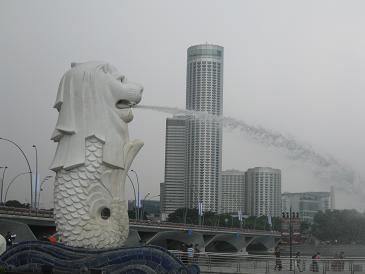
Merlion, a symbol of Singapore, is well visible from all angles and one of major attractions. It is an amazing sculpture of a lion head and body of a fish and dates to the 12th century modest beginnings as a fishing village and legends of Singapura – Lion City. 


Singapore has a rich history starting in the 16th century as a settlement destroyed later by Portuguese invasion. Singapore was rebuilt in the early 1800 by Sir Raffles and flourished since. Hotel Raffles commemorates this great achievement. 


For many Orchard Road has allure and is a true shopping paradise. And it is not just latest fashion and cosmetics. Singapore has the best price on the latest electronics.


Singapore is a delightful destination. It offers excellent entertainment, great shopping and relaxation in grandiose, colonial environment of Raffles Hotel or Vacation Island, Sentosa.